Nestled along the winding waterway that links Lake Union to Puget Sound, Fremont is one of Seattle’s most storied and vibrant neighborhoods; proudly dubbed by locals as the “Center of the Universe.”
Early Roots and Growth
Fremont’s story begins in the late 19th century. In 1888, settlers from Fremont, Nebraska—L. H. Griffith and E. Blewett—platted the area that would become this bustling community. Originally a separate town, Fremont was annexed into the City of Seattle in 1891 as the region around Lake Union steadily developed.
The neighborhood grew rapidly thanks to its strategic location near water and emerging transportation routes. Early industries like lumber mills, shingle works, and an iron foundry laid the groundwork for commerce, while streetcars and rail lines connected Fremont to greater Seattle and beyond.
Lake Washington Ship Canal: A Transformative Engineering Feat
One of the most significant transformations in Fremont’s history came with the creation of the Lake Washington Ship Canal in the early 20th century. From 1911 to 1917, engineers excavated and expanded waterways to connect Lake Washington and Lake Union to Salmon Bay and, ultimately, Puget Sound. This ambitious project created a deep, navigable route for commercial and recreational vessels and reshaped the region’s geography. The canal’s completion in 1917 not only opened Seattle to new maritime trade but also elevated Fremont’s role as a vital crossroads between land and water.
The Iconic Fremont Bridge
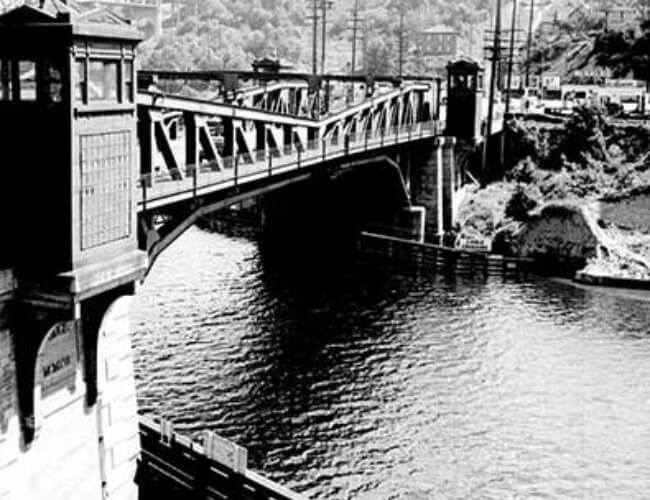
Spanning the Fremont Cut of the Ship Canal, the Fremont Bridge is one of the neighborhood’s most recognizable landmarks. The current double-leaf bascule drawbridge opened on June 15, 1917, just weeks before the canal locks were dedicated, replacing earlier wooden trestles that had served local residents and streetcars. From the start, the Fremont Bridge was designed to accommodate pedestrians, streetcars, vehicles, and later buses and bicycles—making it a central hub of movement for people and goods. Today, it remains one of the busiest drawbridges in the United States due to its frequent openings for marine traffic. In 1980, the bridge was designated a City of Seattle Historic Landmark, a testament to its enduring role in the life and identity of Fremont.
A Neighborhood of Character and Culture
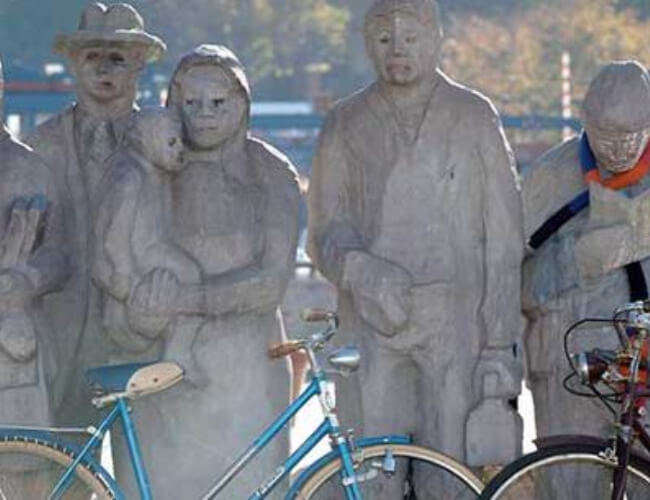
Throughout the 20th century, Fremont continued to evolve. The decline of streetcar service in the 1940s shifted transportation patterns, and by the 1960s the neighborhood began to attract artists, students, and free spirits drawn to its quirky charm and creative energy. Today, Fremont is celebrated for its eclectic public art, lively festivals, independent shops, and dynamic community spirit—qualities born of a rich history that bridges industry, innovation, and imagination.